Pay-per-click (PPC) advertising has long been one of the most powerful digital marketing channels for businesses looking to generate leads, increase brand visibility, and drive measurable revenue. However, recent industry insights suggest that managing PPC campaigns is becoming more complex than ever before.
A recent industry survey highlighted by Search Engine Land reveals that many PPC professionals believe the discipline is getting significantly harder to manage. While artificial intelligence tools are helping marketers automate certain tasks, they are not delivering the dramatic efficiency gains many expected.
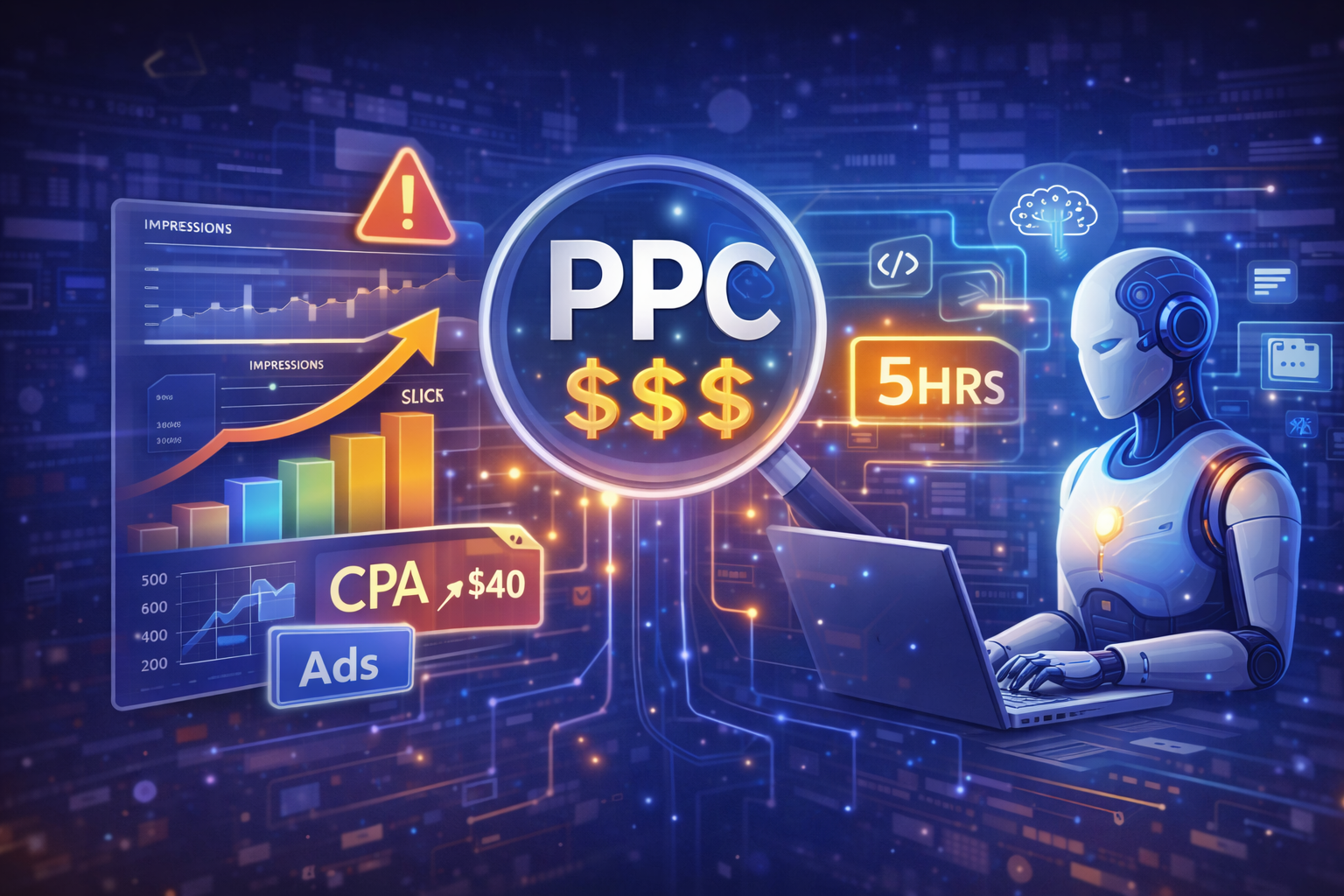
In fact, according to the survey, AI tools are currently saving PPC professionals an average of only about five hours per week, indicating that human expertise remains essential in campaign management.
This article explores the key insights from the survey and what they mean for businesses and marketers navigating the evolving PPC landscape.
The State of PPC in 2026
The survey gathered responses from over 1,300 PPC professionals across agencies, in-house marketing teams, and independent consultants.
One of the most striking findings is that 53% of respondents believe PPC management is harder today than it was two years ago, while only a small percentage feel that it has become easier.
This growing difficulty is not necessarily due to increased competition alone. Instead, marketers are facing challenges caused by:
- Reduced visibility into platform data
- Increased automation with less manual control
- Changes in measurement and attribution
- Rapid adoption of AI-driven advertising tools
These factors combined are making it more difficult for marketers to fully understand how their campaigns are performing and what optimizations are truly driving results.
Why PPC Is Becoming More Complex
1. Less Transparency From Advertising Platforms
Modern advertising platforms increasingly rely on automated systems such as smart bidding, automated targeting, and machine-learning optimization.
While automation can improve performance, it also reduces transparency. Many marketers report that they have less insight into how algorithms make decisions, making it harder to troubleshoot performance issues or refine campaign strategies.
2. Growing Dependence on a Few Major Platforms
The digital advertising ecosystem is highly concentrated.
According to the survey, nearly 89% of digital ad spending flows through just three major platforms.
This concentration creates several challenges:
- Limited diversification options
- Higher dependency on platform policies
- Less bargaining power for advertisers
- Increased vulnerability to platform changes
As a result, marketers must rely heavily on these platforms while having limited control over how campaigns are optimized.
3. Measurement and Attribution Challenges
One of the biggest frustrations marketers face today is accurate measurement.
Privacy regulations, cookie restrictions, and data limitations have made it harder to track user behavior across multiple devices and platforms. Without accurate data, campaign optimization becomes much more difficult.
Many marketers are now investing in independent measurement systems and analytics infrastructure to gain better visibility into campaign performance.
The Role of AI in PPC Campaign Management
Artificial intelligence has become one of the most discussed technologies in digital marketing. AI tools can help with several tasks, including:
- Keyword research
- Ad copy generation
- Audience targeting
- Bid adjustments
- Performance analysis
However, the survey suggests that AI is not yet the game-changing productivity tool many marketers expected.
On average, AI currently saves PPC professionals around five hours per week.
While this is helpful, it is far from replacing human expertise.
AI tools still require:
- Human supervision
- Strategic decision-making
- Performance validation
- Creative direction
In other words, AI can assist with execution, but strategy and optimization still depend heavily on skilled marketers.
A New Trend: Brands Bringing PPC In-House
Another trend highlighted in the survey is that many businesses are bringing PPC management in-house rather than relying solely on agencies.
This shift can be attributed to several factors:
- Greater access to advertising tools
- Increased demand for internal data control
- Cost considerations
- The availability of automation and AI tools
However, managing PPC campaigns internally still requires strong expertise. Many companies underestimate the complexity involved in running profitable campaigns across multiple platforms.
What This Means for Businesses
For businesses investing in paid advertising, these insights highlight several important realities.
PPC Requires More Expertise Than Ever
Despite increasing automation, PPC campaigns still require strategic planning, testing, and ongoing optimization.
Businesses that rely solely on automation without strategic oversight often struggle to achieve consistent results.
Data Infrastructure Is Becoming Essential
Companies must invest in reliable analytics and tracking systems to measure performance accurately.
Without proper data tracking, it becomes difficult to determine:
- Which campaigns generate conversions
- Which channels drive real ROI
- Where marketing budgets should be allocated
AI Should Be Seen as a Support Tool
Artificial intelligence is valuable, but it should be treated as a productivity enhancer rather than a replacement for human expertise.
The most successful PPC strategies combine:
- AI-driven automation
- Human strategic thinking
- Continuous performance testing
- Data-driven optimization
The Future of PPC Advertising
The PPC industry is evolving rapidly as automation, privacy regulations, and AI technologies reshape digital advertising.
In the coming years, marketers can expect:
- Greater automation in campaign management
- More AI-driven bidding and targeting systems
- Increased importance of first-party data
- Continued challenges around measurement and attribution
As these changes unfold, businesses that combine advanced tools with expert strategy will have the strongest competitive advantage.
Final Thoughts
The latest PPC industry survey makes one thing clear: paid advertising is becoming more complex, not simpler.
While AI tools are helping marketers save time, they are not replacing the need for human expertise. Instead, PPC professionals must adapt by learning how to work alongside automation while maintaining control over strategy and measurement.
For businesses, this means investing in the right combination of technology, data infrastructure, and marketing expertise to ensure their campaigns remain profitable in an increasingly competitive environment.
Disclaimer
This article is intended for informational and educational purposes only. The insights referenced in this article are based on industry reports and publicly available research originally published by Search Engine Land. All trademarks and brand names belong to their respective owners. The analysis and interpretation provided here reflect the perspective of the author and are not affiliated with or endorsed by the original publisher.
For more digital marketing insights, visit
https://adifydigitalmarketing.com/